

An international team of scientists will develop a new generation of implants and heart-assist systems that, through advanced sensors and AI-based data analysis, will continuously monitor blood flow and improve the safety of treatment for patients with severe heart failure.
The project is part of the prestigious M-ERA.NET 3 programme and will receive funding from the National Centre for Research and Development (NCBR).
The coordinator of the international consortium of scientific and industrial institutions (from Poland, Austria, and Turkey) is the Institute of Metallurgy and Materials Science of the Polish Academy of Sciences in Kraków, with Assoc. Prof. Roman Major, serving as project leader.
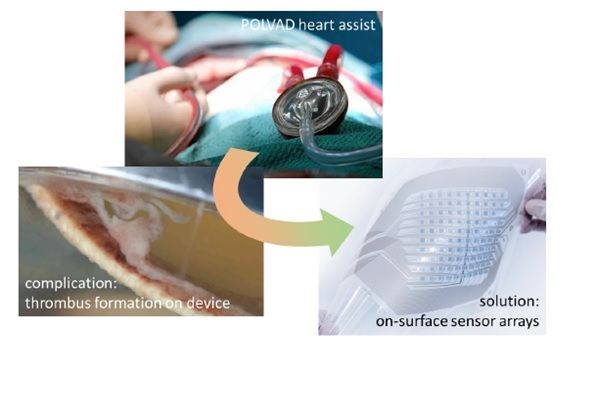
(illustration material; photo: Prof. Zbigniew Religa Foundation for Cardiac Surgery Development)
Heart failure – a challenge for modern medicine
The project addresses one of the major challenges of modern medicine: the treatment of advanced heart failure, which affects over 15 million people in the European Union. For some patients, the use of mechanical circulatory support systems (VAD – Ventricular Assist Devices) is necessary. While these devices help the heart pump blood, they can also cause complications such as thrombosis, hemolysis, or right ventricular failure. These problems occur at the interface between blood and pump components, and early detection is still very difficult.
Smart sensors monitoring blood flow
The goal of the safeHEARTassist project is to develop modern solutions that increase the safety of cardiac assist therapy. One of the key components will be a flexible pressure sensor matrix – a thin, adaptable network of miniature sensors measuring blood pressure.
The matrix will be based on PyzoFlex technology, an elastic piezoelectric material that generates an electrical signal under pressure or deformation. This enables it to act as an extremely sensitive pressure sensor while remaining flexible enough to function in a dynamic environment such as a beating heart.
Hemodynamic maps – real-time images of heart function
Data collected by the sensors will make it possible to create hemodynamic maps showing changes in pressure and blood flow across different areas of the heart chamber. In practice, this will produce a spatial, real-time map of the forces acting on the blood.
Such a system will allow early detection of dangerous phenomena, such as clot formation or red blood cell damage caused by excessive shear forces. The data gathered will also help physicians tailor anticoagulant therapy to individual patients, increasing treatment effectiveness and reducing the risk of complications.
Interdisciplinary collaboration
The project combines various fields of science and technology, including advanced sensor design, Computational Fluid Dynamics (CFD) modeling of blood flow, microstructuring of material surfaces, and AI-based data analysis.

At Lodz University of Technology, the research will be led by Assoc. Prof. Dorota Bociąga, Faculty of Mechanical Engineering. (photo: Bartosz Kałużny, University of Lodz)
Contribution of Lodz University of Technology scientists
The project involves a team from the Institute of Materials Science and Engineering, Faculty of Mechanical Engineering, led by Assoc. Prof. Dorota Bociąga. Researchers will work on developing bioinks for 3D bioprinting and designing scaffold structures that support proper perfusion and cell maturation. These solutions will make it possible to effectively cover material surfaces with endothelial cells – the natural lining of blood vessels.
The team will also design cell non-adhesive microtopographies, perform structural and chemical analyses of materials, study biocompatibility, and conduct in vivo proof-of-concept experiments.
Toward safer cardiac therapies
The expected outcome of the project is the first system enabling real-time hemodynamic mapping in heart-assist devices and in the heart after their removal. This solution will help reduce complications, support cardiac muscle regeneration, and enhance the safety and effectiveness of therapy.
The project will also pave the way for commercialisation of innovative medical technologies in Europe, contributing to the development of modern methods for treating cardiovascular diseases. Dorota Bociąga, Institute of Materials Science and Engineering