The starting point for this interview is the grant awarded to the Faculty under the Ministry of Science and Higher Education’s “Social Responsibility of Science III” programme. What are its objectives?
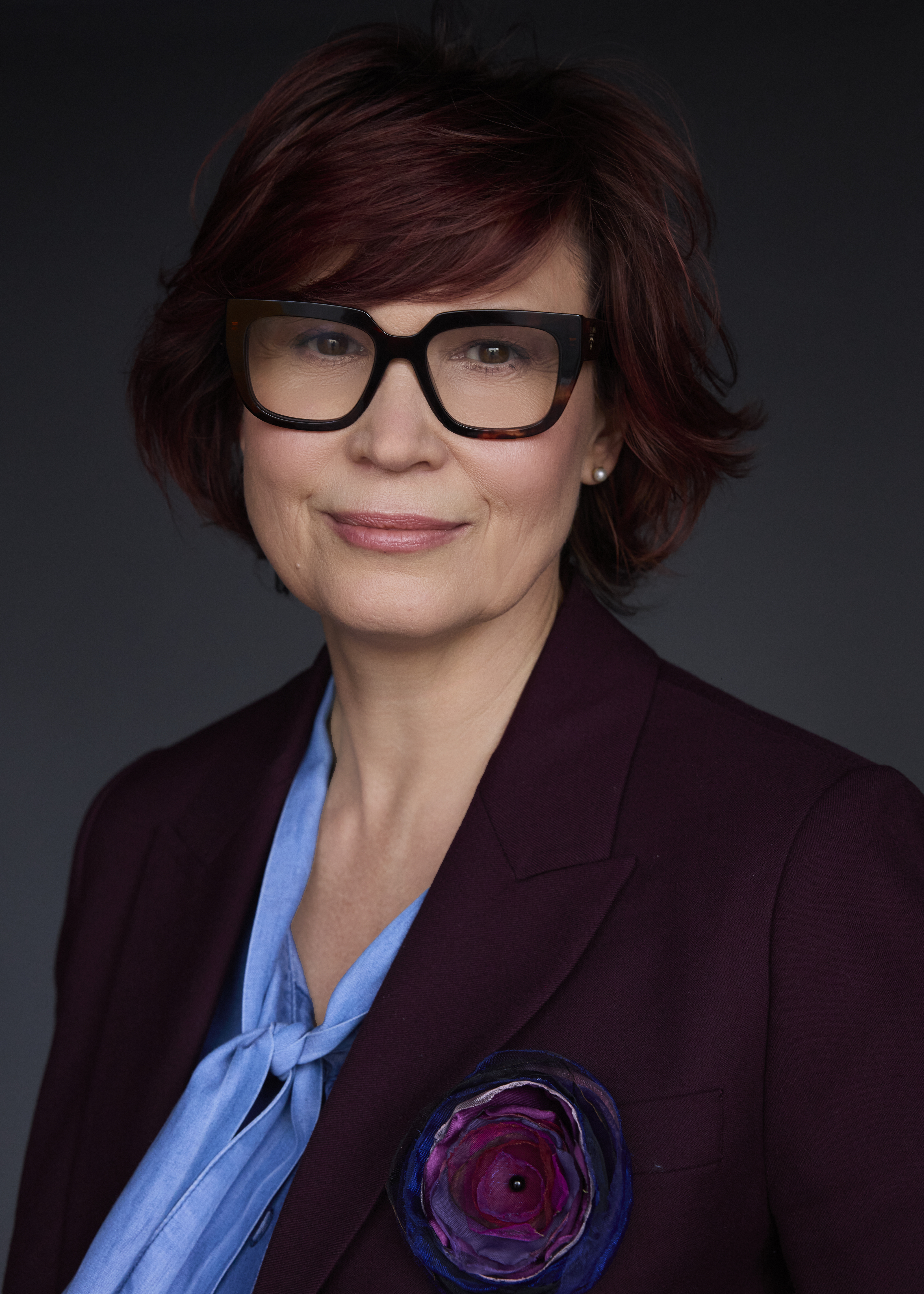
Professor Edyta Gendaszewska-Darmach: The flagship objective of the project, “Summer School of BIOinnovation and the Summer BIOScience Festival of Łódź University of Technology”, is to build a positive image of science as an area close to society, open to the challenges of the future and firmly rooted in practice, as well as to increase the visibility of the research and the diversity of scientific activities carried out at the Faculty of Biotechnology and Food Sciences.
From the participants’ perspective, the most important element will be the opportunity for direct—and often first—contact with modern science, innovative research infrastructure and people conducting scientific research with high application potential. Participation in the events will allow them to develop both practical skills, such as experimentation and data analysis, and soft skills, including creativity and teamwork. We hope that participation in the Summer School and the BIOScience Festival will inspire young people to discover the world of modern science and develop their own paths in STEM, including through further academic education.
The activities are planned for two years. What will happen in the near future?
The Summer BIOScience Festival will take place on 10 and 11 October. It is an open weekend science-popularisation event. We will combine the promotion of research conducted by staff of the Faculty’s units with dialogue with society. The event is aimed at a wide range of audiences, from families with children, school pupils, students and teachers to other residents of the region—demonstrating that science is for everyone. In addition to short popular-science lectures in Polish and English, the programme will include demonstration stands presented by the Faculty’s student scientific associations, as well as field games introducing the challenges that scientists face every day.
What impact on the social environment will implementation of the project have?
Above all, it will increase young people’s interest in STEM education, facilitate access to modern science, and bring the academic community even closer to schools, industry and the local community. In addition, it will increase the accessibility of science—all activities are free of charge for participants and include different levels of support, including free accommodation for adult Summer School participants from outside Łódź. The special guest of the Summer School will be Dr Krzysztof Chyliński, a graduate of the Faculty of Biotechnology and Food Sciences, who participated in research on the CRISPR-Cas system in the laboratory of Professor Emmanuelle Charpentier, co-recipient of the Nobel Prize in Chemistry for developing CRISPR-Cas9 genome-editing technology. The project partners will be Mabion, VegeLio and Enzym Kosmetyki. The project will also disseminate reliable scientific knowledge among society, promoting informed use of scientific achievements, trust in scientific research and a better understanding of contemporary challenges related to health, food, the environment and modern technologies.
Do students contribute to promoting the Faculty?
Our aim is not only to encourage people to study, but above all to inspire young people to discover science and show them that biotechnology and food sciences are fields that will shape the future of society and the economy. Students are very involved in this. Seven student and doctoral research groups operate at the Faculty: the “KOLLAPS” Student Chemistry Research Group, the “FERMENT” Student Biotechnology Research Group, the BioMass Student Research Group, the Functional Student Research Group, the GRAM-positive Student Research Group, the AlgoTech Student Research Group, and the ProbioTeam Doctoral Research Group. Students co-organise science-popularisation events. I am proud of their commitment and their own initiatives. We try to provide strong support for this activity because we are aware of how important it is to reach young people—prospective students. Who could do it better than they could? Their energy is incredible, and I feel that I work with genuine enthusiasts who want to share that energy.
Social media, videos presenting life at the Faculty, and reports on research conducted by our scientists also play an important role. The research groups help us with this by showing everyday university life, modern laboratory infrastructure and opportunities for development after completing our degree programmes.
What science-popularisation activities are the researchers involved in?
The Faculty has extensive experience in this area. We regularly organise visits by school pupils to our laboratories, and we also visit schools, delivering lectures, workshops and demonstrations that popularise science. We regularly take part in the Łódź Researchers’ Night, science festivals and open days. Our regular events include the Chocolate Festival, the Cultural Beer Festival and the May Conference.
The Copernicus Science Centre is also an important partner in these activities—an institution whose mission is to inspire people to explore the world through experience, experimentation and social dialogue about science. Cooperation with the Copernicus Science Centre allows us to reach a wide audience, create attractive forms of education and show that science is not confined to laboratories, but is part of the everyday life of each of us.
What makes this commitment so strong?
The mission of our Faculty is to create and develop scientific knowledge, educate future generations of biotechnologists and food technologists, and build public trust in science through its active popularisation. I believe that researchers, doctoral candidates and students are fully aware of the importance of each of these pillars. We support these activities by using external and University tools, but we also initiate them ourselves.
Our Faculty also runs internal grant competitions aimed at supporting researchers preparing applications for research funding from national and international sources. This idea is implemented through the MOST and COOPERATION mini-grant programmes. The MOST programme supports the development of solutions that have successfully passed the laboratory research stage, increasing their chances of implementation in the economy and social practice. In turn, the aim of the COOPERATION programme is to provide financial support for projects promoting cooperation, innovation and interdisciplinarity, going beyond existing scientific areas. Thanks to this support, researchers can carry out pilot experiments, collect data confirming the validity of the adopted research concept, and prepare competitive applications for institutions such as the National Science Centre, the National Centre for Research and Development, or European programmes. Both initiatives form part of our strategy of building bridges between science, business and society, and of creating conditions conducive to the development of innovative solutions addressing contemporary challenges.
Interview by Agnieszka Garcarek-Sikorska
The project is financed from the state budget, with funds awarded by the Minister of Science and Higher Education under the Social Responsibility of Science III Programme.