

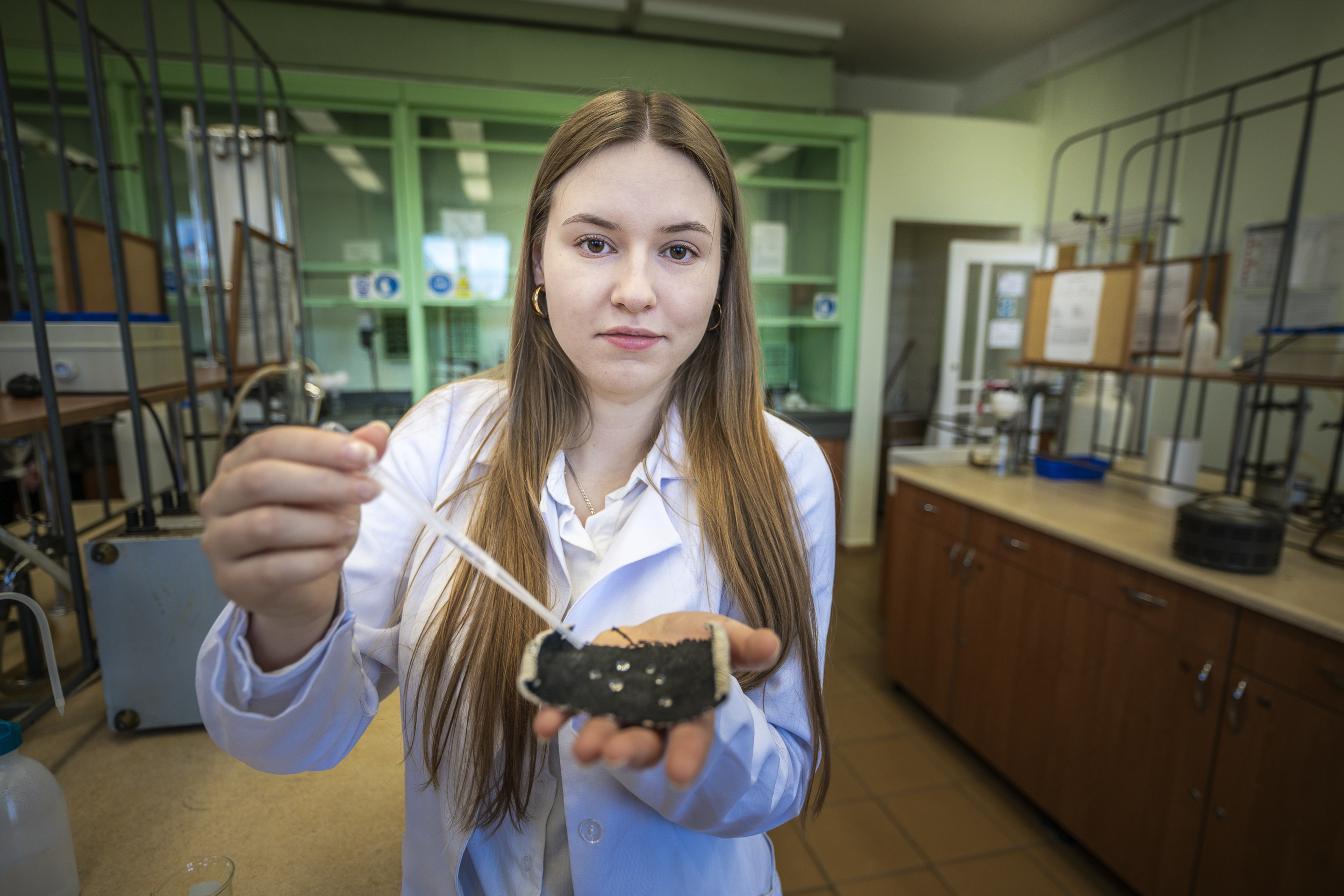
Where does your interest in fabric properties come from?
I’m fascinated by how chemical processes that are invisible at first glance can dramatically change a material’s functionality. During my engineering studies, I specialized in chemical processes in textiles, which gave me solid knowledge about modifying both fibers and finished products. In the future, I’d like to pursue research related to my field, and participating in the E2Top program confirmed that laboratory work gives me the greatest satisfaction.
What do hydrophobic properties depend on?
Hydrophobic properties mainly depend on a material’s surface energy, which determines how a liquid droplet behaves when it contacts the surface. When the material’s surface energy is lower than that of water, liquid molecules attract each other, forming a spherical shape. An important parameter here is the contact angle—the angle between the droplet and the surface. A high contact angle indicates hydrophobicity.
Additionally, better hydrophobicity is achieved in materials with rough surfaces featuring micro-protrusions. In nature, this occurs on lotus leaves, where droplets rest on the tips of these structures and roll off, collecting dirt along the way. Textile hydrophobization aims to replicate this effect.
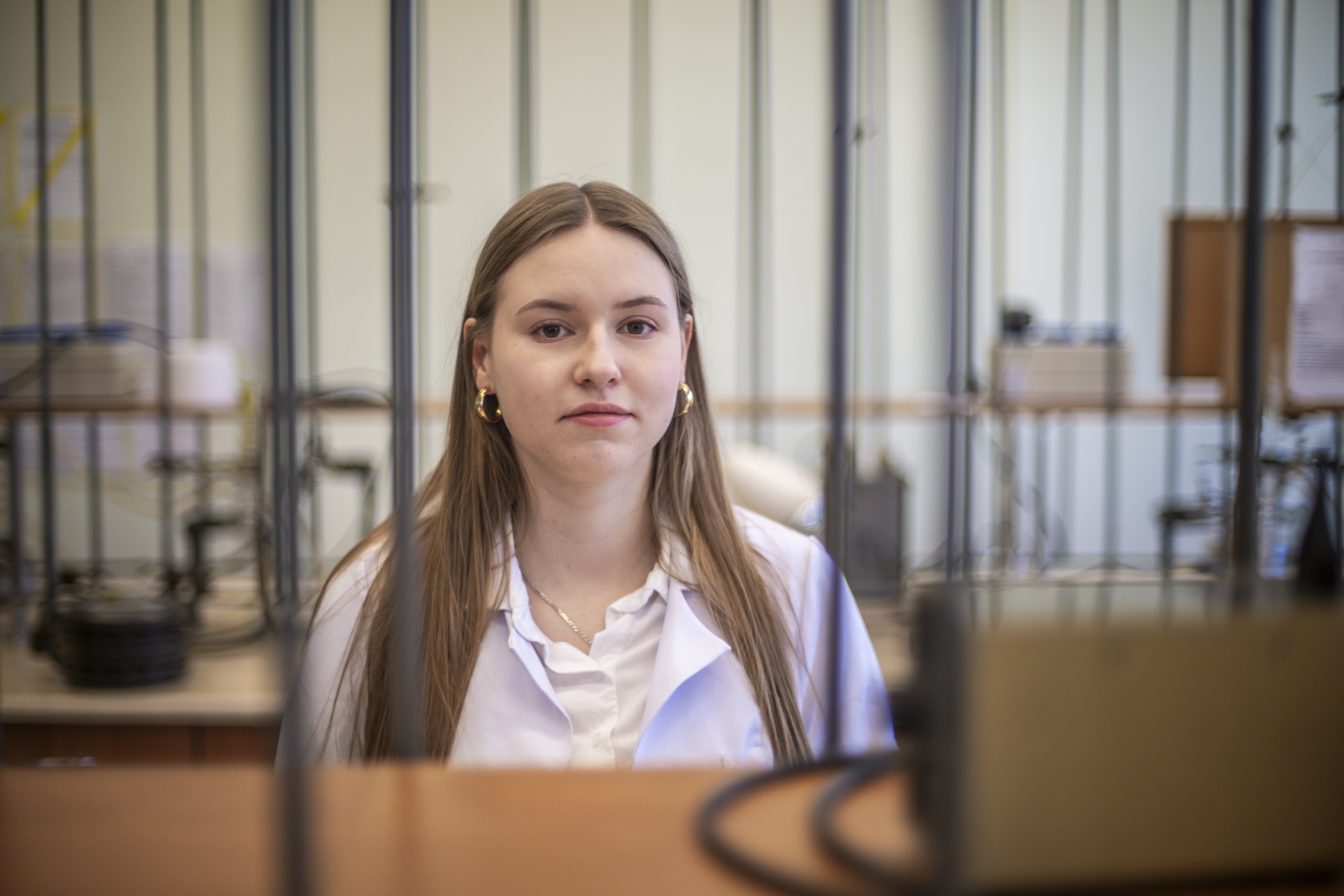
In which industries can your research be applied?
Wherever hydrophobic textiles are needed. In the furniture industry—for upholstery such as chairs and sofas exposed to spills like juice or wine. In the clothing industry—for sportswear, outdoor gear, workwear, and uniforms. Also in medical textiles, including surgical drapes and gowns.
Can every fabric be modified?
No. The feasibility of modification depends mainly on the raw material composition, structure, and resistance to temperature and chemicals. Cellulose fibers such as cotton and linen are particularly susceptible because they contain many active hydroxyl groups, which facilitate chemical reactions. This is used, for example, for durable dyeing or adding antibacterial properties. Synthetic fibers, on the other hand, require more advanced methods or additional processes such as plasma treatment.
How does structure influence fabric application?
There are three main types of materials: woven fabrics, knitted fabrics, and nonwovens. Woven fabric differs from the other two in that it consists of two thread systems—warp and weft—which intersect at right angles, giving it stability.
The fabric structure (weave) determines how warp and weft interlace, which affects properties. For example, denim is made using a twill weave, giving it characteristic diagonal ribs and resistance to abrasion. Originally, jeans were produced as workwear. Satin weave fabrics are softer and more fluid because their structure is less compact, making them suitable for elegant clothing.
Is moisture absorption a major challenge?
Excessive absorption of liquids and moisture is especially problematic in areas exposed to water and difficult to dry. Medical textiles come into contact with bodily fluids and are prone to microbial growth, so they should efficiently repel or transport liquids. Similarly, sportswear must maintain physiological comfort during heavy sweating. Moisture is also an issue in many technical textiles used in construction and upholstery.
Which material is the most durable? Are there “special task” materials?
Durability depends on the raw material, structure, and whether additional chemical or physical processes are applied. In terms of raw materials, textiles include several “super materials,” such as ultra-high-molecular-weight polyethylene and aramid fibers. Kevlar (used in bulletproof vests) and Nomex (used in firefighter protective clothing) are examples of aramids. The “best” material depends on its intended use. Despite excellent mechanical and thermal resistance, these fibers also have drawbacks, such as low UV resistance and difficulty in dyeing and finishing.
What can fabrics be coated with and what properties can be achieved?
There are many ways to finish and modify fabrics. The method and final effect depend on parameters such as structure and raw material. To achieve hydrophobicity in cotton-polyester fabrics, I used silane compounds (silicon-based). However, many other useful properties can be added. For example, silver-based modifications provide antibacterial properties, which are used in medical textiles and sportswear to prevent unpleasant odors.
What support did you receive within the E2Top program?
I received a scholarship throughout the program. I also obtained funding to attend conferences—both international, one in Germany and one in Lodz. This allowed me to learn about scientific advancements and build new professional connections.
What was your cooperation with your mentor like?
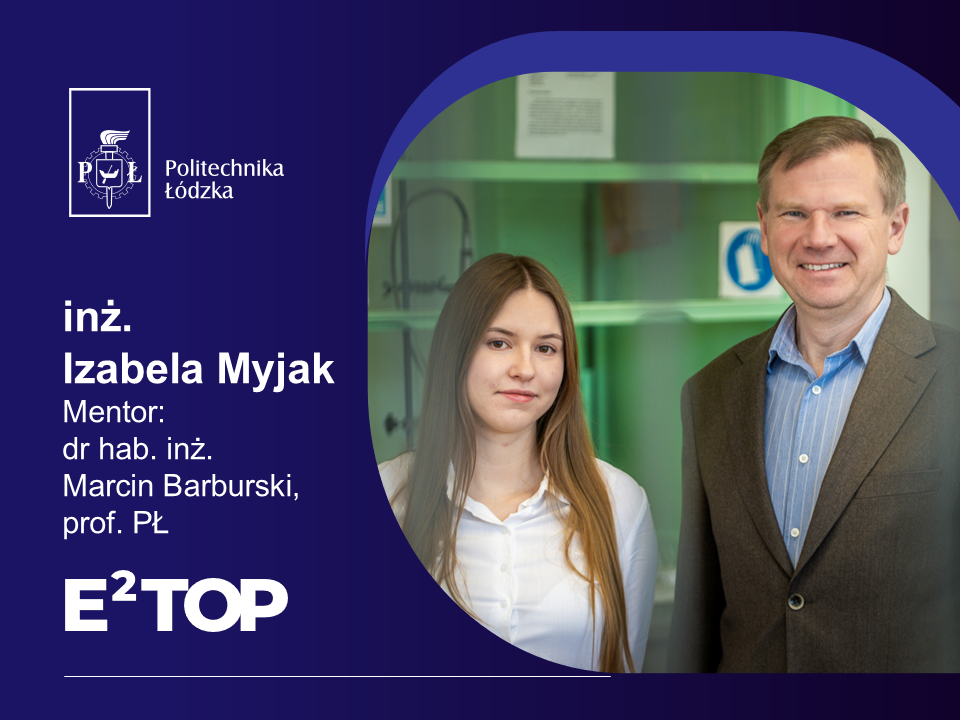
Our cooperation went very well from the beginning. Professor Marcin Barburski was positive about my project idea. First, we had to develop a research plan and present it to the recruitment committee. My mentor emphasized from the start that we were a team, and I could always count on his substantive support and valuable guidance. He also encouraged me to continue developing and presenting my results at conferences.
Interview by Agnieszka Garcarek-Sikorska