

priority research area: (Re)EnergyTech
Research achievements
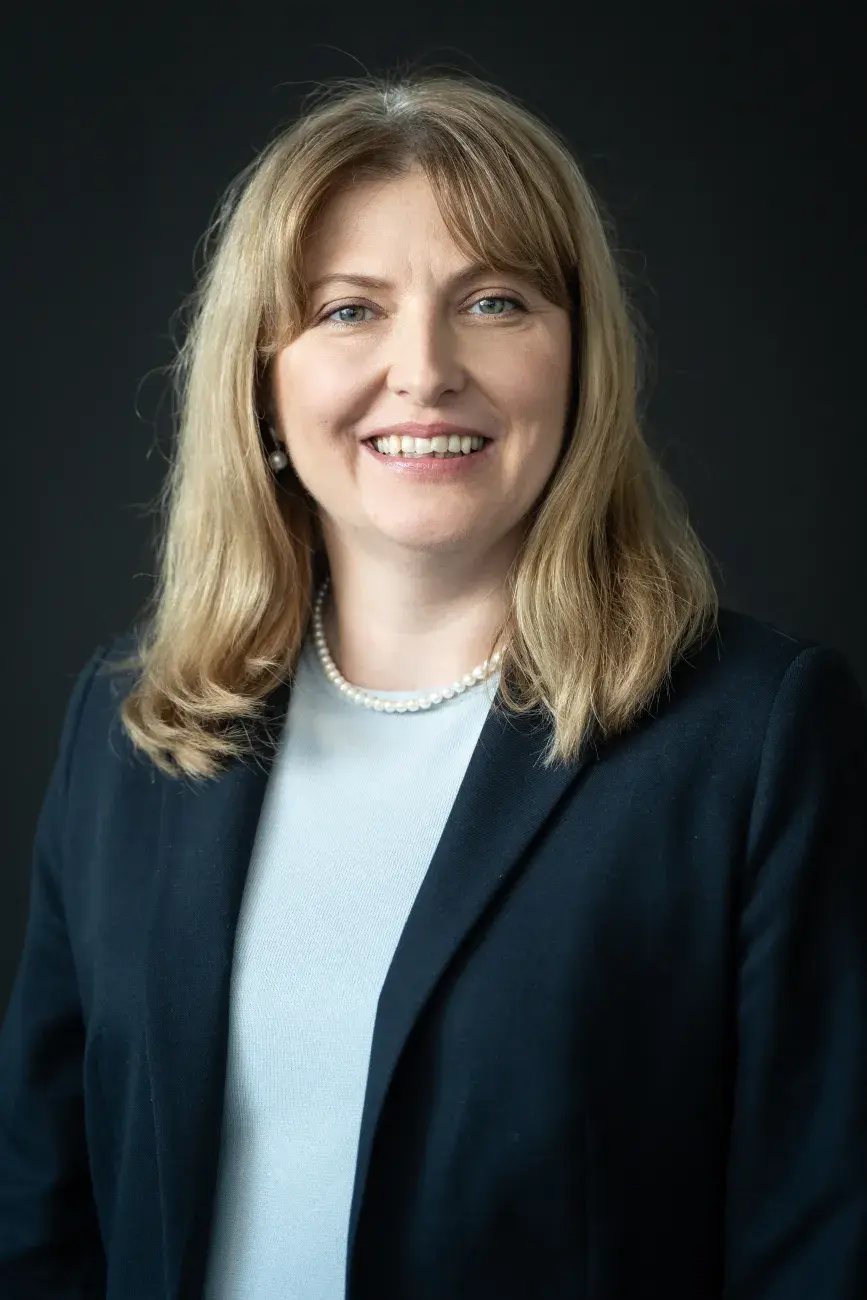
Dr Beata Łuszczyńska, Associate Professor and Head of the Department of Molecular Physics at the Faculty of Chemistry, Lodz University of Technology, is a recognised specialist in the fields of molecular physics and organic optoelectronics. Her research focuses on the design and fabrication of advanced optoelectronic devices, such as organic light-emitting diodes (OLEDs), organic photovoltaics (OPVs), and photodetectors, using printed technologies. She conducts research into layer and interface engineering in printed and flexible optoelectronic structures using solution-processing techniques. The results of her work contribute to the development of energy-efficient lighting technologies and modern flexible electronics, strengthening the position of Polish science on the international stage.
Research profile and interests
Professor Łuszczyńska’s primary research areas include molecular physics, organic optoelectronics, and modern functional materials intended for applications in printed electronics and photovoltaics. She works on the modification of electrode–semiconductor interfaces, the optimisation of charge carrier transport and recombination processes, and the development of printing technologies for organic diodes and cells. She is currently focusing on the development of structuring technologies for printed QD-LEDs, interface layer engineering in thin-film devices, and the development of new materials for high-efficiency perovskite and organic photovoltaic cells.
Industrial cooperation, implementations, and expert activity
Professor B. Łuszczyńska actively bridges the gap between scientific research and industry, collaborating with companies such as QWERTY Sp. z o.o. (long-standing cooperation on R&D projects, including those funded by the NCBR), Merck, and Noctiluca. She is the author and co-author of patents concerning, among others, organic light-emitting diodes and new iridium (III) complexes. Her achievements also include industrial implementations, such as the presentation of a demonstrator developed within the framework of the POLBER project at the LOPEC 2025 trade fair. She holds several expert roles, including being a member of the Presidium of the National Smart Specialisation (KIS9) working group, a member of the Mazovian Hydrogen Valley Cluster Council, and an expert evaluator of proposals for European Commission competitions (Horizon 2020).